Alexandria welcomes you.

Sydney, Australia

Look again.
Listen closer.

I can listen to someone’s story and add what I learned to my picture.

Words for your journey

Begin with hello.

These English words may be familiar. Listen to how they sound here. Try one with someone beside you.

Australian English

Hello

A friendly way to begin.
Australian English

Thank you

Words for someone’s help or care.

Australian English

Please

A word to use when you ask.

Australian English

Goodbye

A way to finish your visit.

Tubowgule · Sydney Harbour

What catches your eye?

Look at the Opera House beside the harbour. Choose a detail for your first picture. A curve, a line or a dot can begin it.
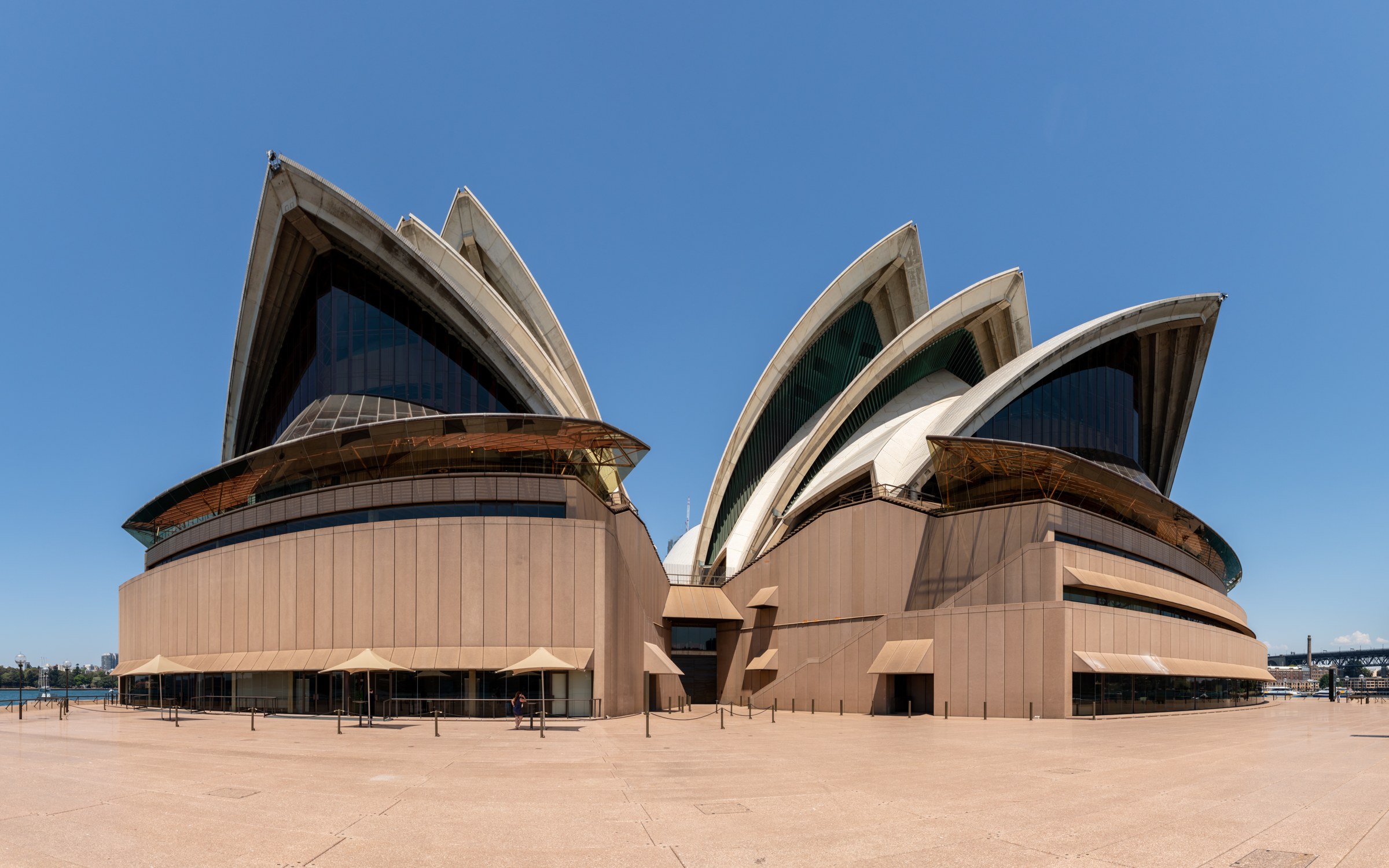
The white shell roofs and glass walls of Sydney Opera House, with people walking across the forecourt.
A photograph of Sydney Opera House at Tubowgule.

Matilda's listening card · Sydney

Look. Listen. Draw again.

In our book, Matilda listens before she shares her thanks. Your picture can hold something you noticed and something you learned.

Look at the harbour photograph above. Make a first mark about something you notice.

Draw with arrows

Move the pen with arrows. Put it down to draw a line. Lift it to move without drawing. Enter makes a dot.

You can draw with your finger, a mouse, or the arrows.

Now listen · 36 seconds

A harbour holds stories.

Georgia and Shani look across Sydney Harbour. Listen for something this place gives to people.

The shell roofs of the Sydney Opera House beside the harbour.

Listen for something the harbour gives to people. Captions are available.

Read or hear it together

Georgia and Shani point out the bridge, buildings, ferries and trains. They explain that this harbour has long been a gathering place for Aboriginal people, with food and water.

The Gadigal people are the Traditional Custodians of Tubowgule, where the Opera House stands. People continue to gather and share stories here today.

What would you like to add now: something you heard, or a detail you want to look at again?

Show what changed.

Point to a detail you added after listening. Tell or show a friend how their story helped you see this place again.

Ask someone who knows a place you know to share a memory, if they would like to. Draw, listen, then add a detail. You can point, speak or show what changed.

Carry it into your world

Someone else sees a story.

Choose a place you know. Ask a trusted person if they would like to tell you something they remember there.

Make a picture, listen, then add a detail. Show what changed. Your listener can say or point to what they notice. Keep your choice, or try it another way.

You can use paper, make shapes with your hands, or tell the picture aloud. There is no single right picture.

Your world keeps growing

A little more of Sydney.

Take one thing you noticed into your next conversation.

Sydney, together

Allow about 15–25 minutes, or explore a little at a time. Begin with the travel view. Choose a place, open its stories, or use the map. The whole-photo button reveals the full photograph on a small screen.

A drawing that changes through listening

Look at the Opera House and harbour photograph. Invite a child to make one first mark. Then watch the 36-second excerpt or read its equivalent aloud. Invite an added detail and ask the child to point to what changed. A younger child can make a dot or gesture; an older child can explain which source shaped their revision.

For a shared display, one person can draw while others point or describe. Take turns. On paper, fold a page loosely into two views or add a new detail to the same picture. No device, writing, drawing skill or public sharing is required. A child may observe or pass.

Carry the practice into daily life: with a trusted person’s consent, listen to a memory of a familiar place. Make, explain, reflect, look again, then use the practice elsewhere. The passport stamp records a visit, not mastery.

Culture, history and care

Matilda’s listening card is a fictional story object. We do not ask children to write or perform an Indigenous Acknowledgement of Country, give a Welcome to Country, copy cultural designs, or retell restricted stories. Invite careful listening to named people in an authorized public source.

In the film, Georgia identifies herself as a Wadjar woman from the Gumbaynggirr Nation, and Shani identifies herself as Wiradjuri. Their identities do not make them interchangeable with Gadigal Traditional Custodians. The Opera House’s First Nations program describes the continuing cultural life of this place. Tubowgule’s history and Reconciliation Australia’s protocol guidance are for adult preparation.

Name the maker, date, place and viewpoint of each source. A photograph shows one view at one time. A person’s account adds meaning it cannot show. Our design draws on historical thinking, the C3 Inquiry Arc, Cortés’s bridgebuilding across past, present and future, and cultural humility. These are design references, not claims that a single activity certifies mastery. Read the framework guide.

Film and language

Guwanyi Walama: First Nations Kids Tour of Sydney Opera House, published by Sydney Opera House. This lesson embeds the original player at 4:38–5:14. Georgia and Shani identify harbour features and its importance as a gathering place. English captions are supplied by the original publisher. The visible equivalent is a short paraphrase, not a replacement cultural performance. Publisher’s program page.

Ordinary English greetings use an Australian English pronunciation model, en-AU-Neural2-A. They do not represent every Australian accent. No Indigenous words or cultural voices are synthesized. Listen together and use the words in a real exchange.

Photographs, travel and source credits

All five stops are real dated photographs, not live feeds or 360-degree captures. Open Whole photo for their full framing. The two short ferry and train rides are people-free rendered interpretations of travel, not recordings of a measured route or current service.

Plan an actual visit using current information from Transport for NSW and the Royal Botanic Garden Sydney. Our stops do not form a suggested itinerary or swimming activity.

Map data: OpenStreetMap contributors, Open Database License. Map display: Leaflet.

Your drawing and visit stamp stay in this browser. This lesson does not ask for a name, record a voice or upload a drawing. Clearing site data removes saved work. Playing the embedded film contacts YouTube, whose player has its own controls and policies.

Make a new drawing?

This clears both parts of your picture on this device.

A real view of Sydney

Our Sydney places

The harbour, garden, bridge and Manly shore. Choose a stop to travel there.