Alexandria’s World
For families, teachers and homeschool guides. Start with a story. Follow a child’s curiosity. Make something together.
Explore freely. No account is needed.A small guide to a big world.
- Choose a country. Tap a flag, or open the Country List A–Z.
- Meet a friend. Open an available book. Use Read big to bring its words or picture closer. Read aloud together.
- Step into the place. Enter an available lesson. Try its stops, map, greetings and film at your own pace.
- Bring something home. Make the city’s activity together, listen to each other, then try it in your own world.
Open right now checking…
Choose a city to see its book and companion lesson. The list follows what is open on the website.
The seven stops below show how to explore together.
Up here, the whole world is yours.
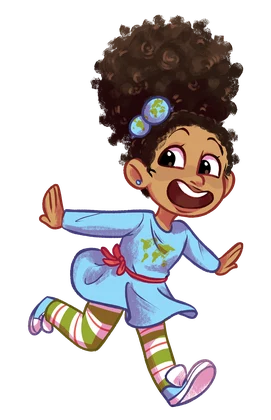
Open alexandriasworld.com and the world is already spinning. No login, no setup, no cost. 195 countries, each with a flag your explorers can press, on the classroom projector, a tablet, or the kitchen table laptop.
Prefer keyboard or a screen reader? The Country List A to Z button reaches every country without touching the globe.
Press a flag, and a friend says hello.
Every country opens like a page from a picture book: a greeting with its pronunciation, a fun fact worth repeating at dinner, the capital, a friend to meet, and a family recipe. When a book exists, the card leads straight into it.
 United Arab Emirates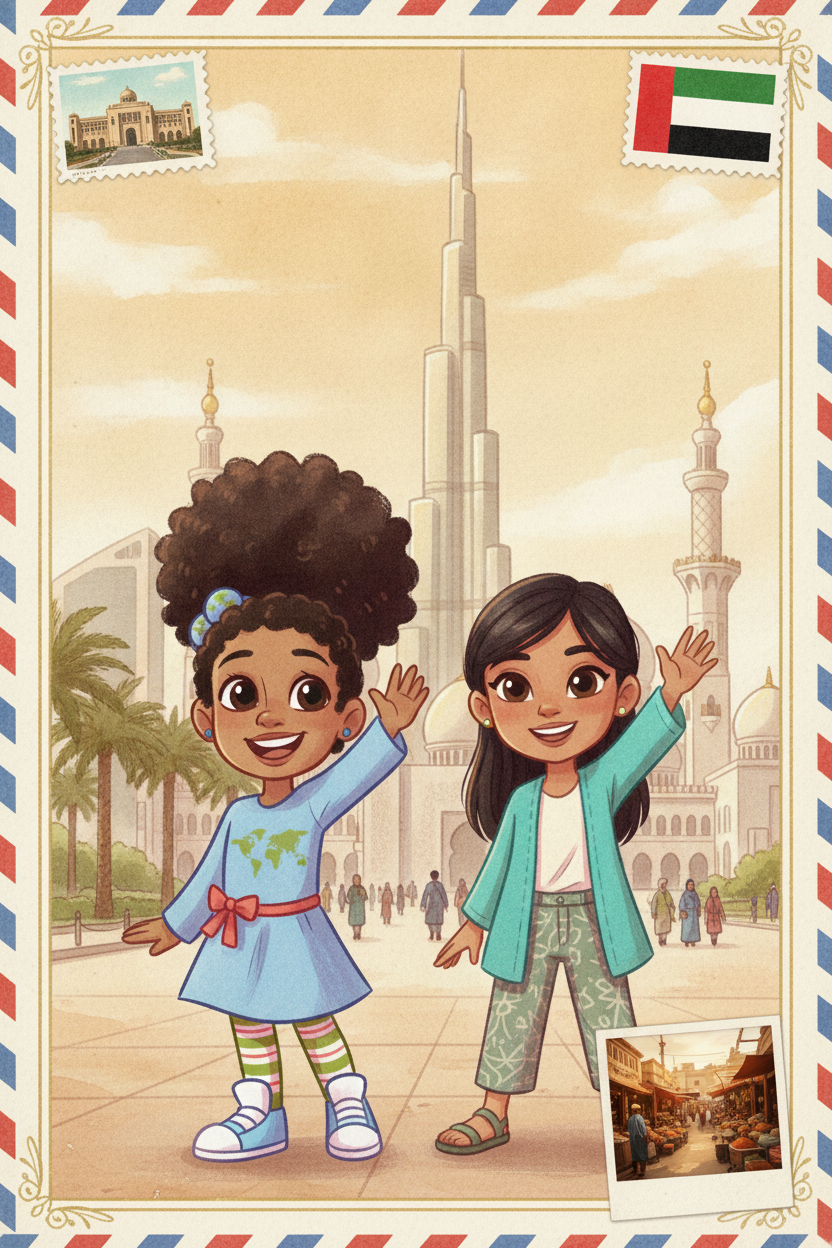
Capital: Abu Dhabi · You’ll meet: Dabya
Countries without a book yet say so honestly: “Alexandria’s story from here is on its way!” No dead ends, ever.
The story belongs in the room.
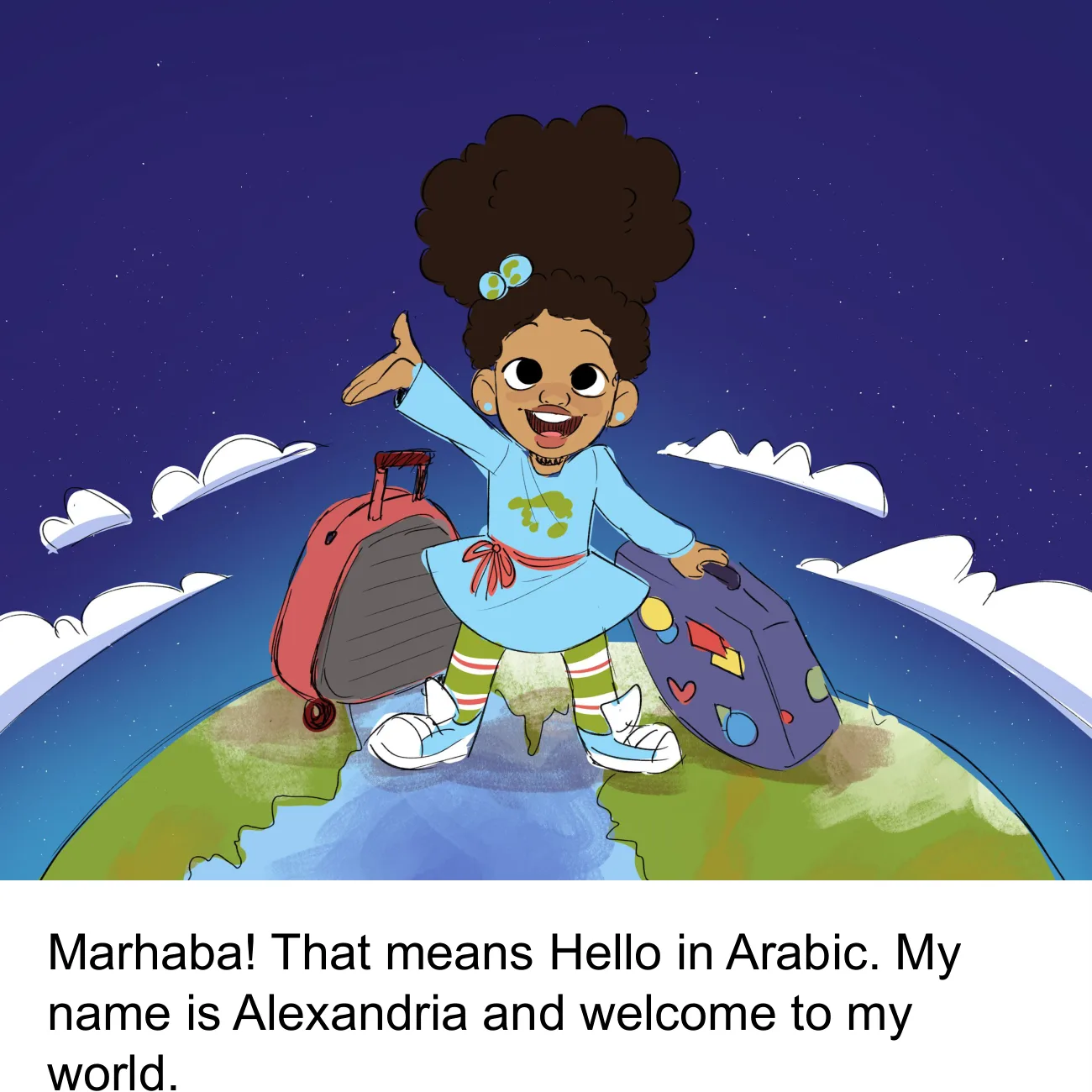
Open a book from its country card. Turn the pages together. Let children pause over a picture, point to a detail or ask a question.
Read big brings the words or picture forward. A grown-up can read aloud while everyone looks. Each country card shows its available book and lesson.
A book is the beginning of the visit. The lesson carries it into real places and something children can make.
From a story into someone’s world.
Each city has its own journey. Travel between places, use a greeting, watch a short film and make something connected to a moment in the book. A shared screen works well: take turns with the controls and invite everyone to notice.
Same welcome. A different thing to make.
In Delhi, a child’s new memory sits beside an older one. In Marrakech, a folded drawing becomes a gift to offer. In Lagos, children choose the light and keep three pictures to tell a story.
Choose an open lesson from the list above and begin your journey together.
The lesson’s For grown-ups button holds materials, timing, local context, travel information, sources and media credits. Children can keep exploring within the lesson.
Films are optional. Their visible descriptions give children something to observe when a video cannot play. Embedded services may have their own controls and data practices; preview them together.
One story. Paper. Each other.
A whole class can explore with one screen. No device? Read the book together and use the lesson’s printable, or begin with plain paper and drawing tools.
- Offer more than one way in. Children can draw, point, speak, gesture or work with a partner. They can pass on sharing something private.
- Give everybody a making role. One person might hold a picture while another explains a detail. Switch roles.
- Listen before explaining. Ask the audience what they notice. Then let the maker tell the story.
- Try it again. Add a detail, change a part, or explain why it should stay. Take a small version home to someone the child knows.
A remembered classroom place, an invented character or a small everyday moment is enough. No family photograph, full name or home address is needed.
Making room for another view.
Children meet someone else’s world and make something from their own. The grown-up helps each child listen, explain a choice and decide what to try next.
The frameworks behind our journeys
Cortés and bridge-building. Carlos Cortés’s past, present and future lens informs our work. We connect it with I, You and We: my experience, another person’s experience and what we can make together. Our nine-cell names are local interpretations, not quotations from Cortés. Cortés’s published article (new tab).
NCHS historical thinking. The National Center for History in the Schools names chronology, comprehension, analysis and interpretation, research, and historical issues and decisions. A young child might sequence two images or compare what two accounts reveal. A historical claim needs traceable evidence. NCHS K–4 standards (new tab).
C3 inquiry and NCSS themes. C3 connects questions, disciplinary tools, evidence and communicating conclusions, with informed action where it fits. NCSS themes such as culture, change over time and people and places help organize a particular inquiry. Each journey uses relevant parts; it does not cover every theme. C3 Framework (PDF, new tab) · NCSS themes (new tab).
Common Core narrative writing. Drawing, dictating, telling a sequence and adding detail with support can prepare or demonstrate age-appropriate narrative work. Teachers select the exact grade-level standard and examine what the child makes. These are design references, not a claim that a visit proves standards mastery; preschool work builds toward later skills. Common Core ELA standards (PDF, new tab).
The learning behind the making
Our lessons follow a making process: create something, walk another person through it, reflect on their response, decide what to keep or change, and carry the idea into daily life.
That might be two memory drawings, a folded story gift or a three-picture film. The evidence is what the child makes, explains and revises. A passport stamp remembers a visit; it does not grade the child.
Creative work, communication, judgment and working with other people matter in a changing world. Technology gives children another way to author something. Paper, conversation and movement remain equally useful.
History, memory and evidence
When a photograph, place or story invites a question, begin with what is actually there. Who made it? When and where? What can we see, and what are we remembering or wondering?
Compare two views of a familiar place. A difference is an invitation to listen and look for more evidence. One person’s memory does not represent every person’s experience. Nobody needs to share a private family story.
Our early journeys offer a slice of daily life. Deeper historical study needs more voices, records and time. Each city’s grown-up notes hold sources specific to that place.
Cultural humility and our sources
We approach a local friend as someone with their own knowledge and choices. Adults can name what they do not know, question an assumption and listen to people connected to the place.
Tervalon and Murray-García described cultural humility as continuing self-examination and reciprocal relationships. Their original work concerned medical education; our use here is an adaptation for shared learning.
Read the original cultural-humility abstract (opens a new tab).
Welcome Home!
- The globe, available books and lessons can be explored without an account.
- Children make, discuss and reflect. There are no quiz gates in these journeys.
- Children do not need to enter a name or email to take part.
- A paper activity and a trusted partner can carry the learning beyond the screen.
Leave a little sunshine Never needed. The world is free either way.
For grown-ups · Letters from Alexandria’s World
Bring a little more of the world home.
A weekly idea to try together, and a note when new books and lessons are ready to explore.